
Forex leverage sounds exciting when you first discover it.
A broker tells you that you can control a much larger position with a smaller amount of money. Suddenly, a small account feels bigger. A tiny price move looks like it could produce meaningful profit. The chart only needs to move a little, and the numbers start to look attractive.
But leverage is also where many retail forex traders get into trouble.
The problem is not that leverage is automatically bad. The problem is that many traders use leverage before they fully understand margin, position size, drawdown, stop losses, and how quickly losses can grow when exposure is too large.
At TradeDoctorAI, we see leverage as something every forex trader should understand before trading live. If you do not track how much exposure you are taking, how much margin you are using, and how much you are really risking, your trading journal will only tell part of the story.
Leverage does not make a trade better. It only makes the outcome bigger.
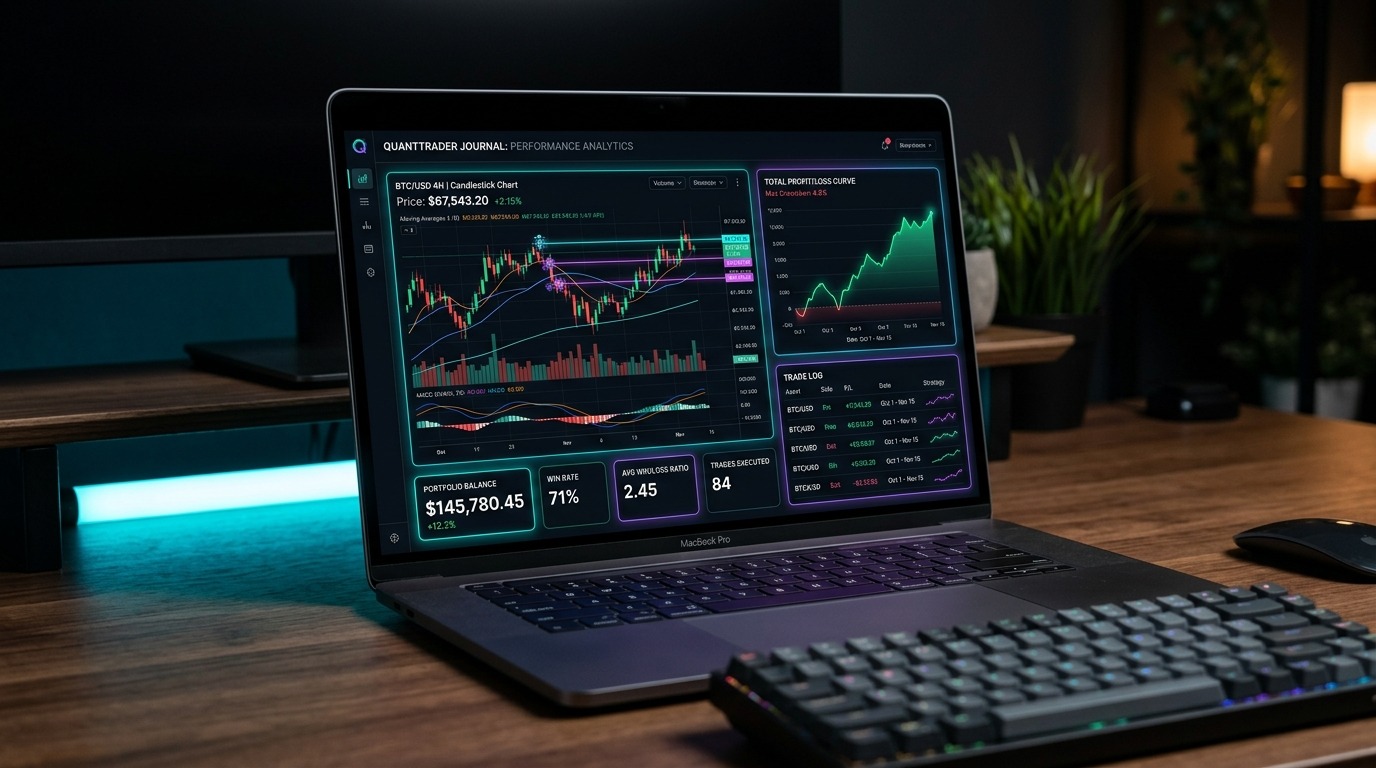
What Is Leverage in Forex?
Leverage in forex means using borrowed trading exposure from your broker to control a larger position than your account balance alone would normally allow.
For example, if your broker offers 30:1 leverage, you may be able to control a $30,000 position with $1,000 of required margin. If your broker offers 50:1 leverage, you may be able to control a $50,000 position with $1,000 of margin.
That does not mean you have free money. It means your profits and losses are calculated on the full position size, not just the margin you put down.
This is the part many beginners underestimate.
If you control a large position, even a small move against you can create a meaningful loss. Leverage increases exposure. Exposure increases both opportunity and risk.
What Is Margin in Forex?
Margin is the amount of money your broker requires you to set aside to open and maintain a leveraged forex position.
Think of margin as a deposit required to hold the trade. It is not a fee, and it is not the maximum amount you can lose. It is the amount needed to support the position.
For example, if a position has a notional value of $10,000 and your broker requires 3.33% margin, you need about $333 in margin to open the trade.
The rest of the exposure is created through leverage.
Leverage vs. Margin: The Simple Difference
| Term | Simple Meaning | Example |
|---|---|---|
| Leverage | How much larger your trade exposure is compared to the margin required | 30:1 leverage means $1 controls $30 of exposure |
| Margin | The amount of money required to open or maintain a leveraged trade | 3.33% margin means $333 supports about $10,000 exposure |
Leverage is the ratio. Margin is the required deposit.
They are two sides of the same idea.
A Simple Forex Leverage Example
Let’s say you have a $2,000 trading account and you want to trade EUR/USD.
Your broker offers 30:1 leverage. That means your maximum possible exposure may be much larger than your account balance. But maximum available leverage is not the same as smart position sizing.
Example:
- Account balance: $2,000
- Position size: $30,000 notional exposure
- Margin requirement: about $1,000 at 30:1 leverage
- Remaining account equity buffer: about $1,000 before floating losses and other trades
If the trade moves against you, your loss is based on the $30,000 position, not the $1,000 margin.
This is why using the maximum position your broker allows can be dangerous. Your broker’s platform may allow the trade, but that does not mean the trade fits your risk plan.
What Is a Margin Call?
A margin call happens when your account equity falls too low to support your open positions. Depending on the broker and regulation, the broker may warn you, restrict new trades, or automatically close positions.
In simple terms, margin trouble happens when your floating losses reduce your account equity and you no longer have enough margin to maintain the position.
This is why traders should not think only about entry and target. You need to know:
- How much margin the trade uses
- How much free margin remains
- Where your stop loss is
- How much you lose if the stop is hit
- Whether multiple open trades are correlated
A margin call is not a strategy. It is a warning that risk has already gone too far.
Retail Forex Leverage Limits Vary by Region
Retail leverage limits are different depending on where you live, your broker, and whether you are classified as a retail or professional client.
For example, public regulatory guidance has shown common retail leverage caps such as:
- United States: retail forex rules commonly reference 2% margin for major currency pairs and 5% for other pairs, equivalent to about 50:1 and 20:1 leverage.
- United Kingdom and Europe-style CFD rules: retail CFD leverage is commonly limited to 30:1 for major forex pairs and lower for other assets.
- Australia: ASIC’s CFD product intervention order reduced retail CFD leverage, with maximum leverage ranging from 30:1 to 2:1 depending on the underlying asset class.
These rules can change, and offshore brokers may advertise much higher leverage. Higher leverage is not proof of a better broker. It usually means more risk is available to the trader.
Always check your broker’s current rules, your local regulations, and the product you are trading before using leverage.
Why High Leverage Is Dangerous for Retail Traders
High leverage makes it easier to take a position that is too large for your account.
The trade may look small because the required margin is small. But the real risk depends on position size, stop distance, volatility, spreads, slippage, and how many trades you have open.
Common high-leverage problems include:
- Oversized positions: Traders control more exposure than they can emotionally or financially handle.
- Small stop mistakes become large losses: A stop that is only a few pips too wide can cost much more than expected.
- Margin pressure: Floating losses can quickly reduce free margin.
- Emotional trading: Large position size makes traders close early, move stops, or revenge trade.
- False confidence: One leveraged win can make risky sizing feel normal.
Leverage does not create discipline. In many cases, it reveals whether discipline is actually there.
The Mistake Beginners Make With Leverage
The biggest beginner mistake is asking, “How much can I trade?” instead of “How much can I afford to lose if I am wrong?”
Your broker may show available margin. That number can tempt you to open a larger trade. But a serious trader starts with risk first.
Before entering a forex trade, ask:
- Where is my stop loss?
- How many pips am I risking?
- What is the dollar loss if the stop is hit?
- What percentage of my account is at risk?
- How much margin does this trade use?
- Can I accept this loss without breaking my rules?
If you cannot answer those questions, the trade is not ready.
Position Size Matters More Than Broker Leverage
A broker may offer 30:1 or 50:1 leverage, but you do not have to use all of it.
Professional-style risk management starts with position size. You choose the trade size based on your stop loss and risk limit, not based on maximum available leverage.
For example, if your account is $2,000 and you decide to risk 1% per trade, your planned risk is $20.
If your stop is 20 pips away, your position size should be based on losing about $20 if the stop is hit. If your stop is 50 pips away, your position size should be smaller.
This is the correct order:
- Define the trade idea.
- Place the invalidation point.
- Decide how much account risk is acceptable.
- Calculate position size.
- Check margin requirement.
- Enter only if the trade fits the plan.
Many retail traders reverse this order. They choose size first, then try to make the stop fit. That is how risk gets distorted.
How Margin Can Affect Your Trading Psychology
Margin and leverage are not just math. They affect trading psychology.
When position size is too large, normal price movement starts to feel threatening. A small pullback can feel like a disaster. A normal stop loss can feel unacceptable. That emotional pressure leads to bad decisions.
Common psychology problems from excessive leverage include:
- Closing winners too early because the open profit feels large
- Moving stops because the loss feels too painful
- Skipping valid trades after one leveraged loss
- Revenge trading to recover margin losses
- Checking account equity instead of price structure
If your position size makes you unable to follow your plan, the size is too large. Even if the margin requirement looks acceptable.
What to Track in Your Trading Journal
If you trade forex with leverage, your journal should track more than profit and loss.
Inside your TradeDoctorAI trading journal, include these leverage and margin fields when possible:
- Currency pair: EUR/USD, GBP/JPY, USD/CAD, and so on
- Position size: Lot size or notional exposure
- Leverage used: Broker leverage or effective leverage
- Margin required: How much margin the trade used
- Free margin before entry: How much buffer remained
- Stop distance: Number of pips to stop loss
- Planned risk: Dollar amount, percentage, or R-multiple
- Actual risk: What actually happened after exit
- Emotional state: Calm, rushed, fearful, frustrated, or overconfident
- Rule adherence: Did you follow your risk plan?
This helps you see whether losses come from strategy, leverage, position sizing, or emotional decisions.
How TradeDoctorAI Helps Review Leveraged Forex Trades
TradeDoctorAI helps traders move beyond basic trade logging. If you record position size, planned risk, actual risk, and emotional notes, AI trade review can help identify leverage-related patterns.
For example, TradeDoctorAI can help you notice:
- Your worst forex losses happen when position size is above normal.
- You move stops more often when margin usage is high.
- Your execution quality drops after leveraged losses.
- You perform better when risking a smaller fixed percentage.
- Your emotional trades use more exposure than planned trades.
You can use AI Trade Review to study whether your leverage use supports your strategy or quietly damages your discipline.
A Simple Risk Rule for Retail Forex Traders
Here is a practical rule:
Never choose position size based only on available margin.
Available margin tells you what the platform may allow. It does not tell you what is wise for your strategy, account size, emotional tolerance, or risk plan.
A better rule is:
- Risk a small fixed percentage per trade.
- Use a stop loss based on market invalidation.
- Calculate position size from the stop distance.
- Keep enough free margin for normal volatility.
- Avoid stacking correlated forex positions.
- Review every trade where actual loss exceeded planned loss.
This keeps leverage in its proper place. It becomes a tool for execution, not a reason to oversize.
Common Leverage and Margin Mistakes
Mistake #1: Using Maximum Leverage Because It Is Available
Just because your broker allows a position does not mean your account can handle the trade. Maximum leverage often leaves little room for normal price movement.
Mistake #2: Ignoring Free Margin
Free margin is your buffer. If too much of your account is tied up in margin, small market moves can create stress quickly.
Mistake #3: Moving Stops to Avoid a Loss
Moving a stop can turn a planned loss into a margin problem. Track planned risk versus actual risk in your journal.
Mistake #4: Opening Correlated Positions
If you are long EUR/USD, long GBP/USD, and short USD/CHF, you may be taking similar dollar exposure across multiple trades. Correlation can make risk larger than it appears.
Mistake #5: Thinking Margin Is the Maximum Loss
Margin is not the maximum loss. Your loss depends on position size, price movement, execution, slippage, and broker protections.
Featured Answer: What Are Leverage and Margin in Forex?
Leverage in forex lets retail traders control a larger position with a smaller amount of capital. Margin is the money required by the broker to open and maintain that leveraged position.
Leverage increases both potential profit and potential loss. Margin is not the maximum amount you can lose. Retail traders should calculate position size from planned risk and stop distance, not from the maximum leverage their broker allows.
FAQ
Is leverage good or bad in forex trading?
Leverage is not automatically good or bad. It is a tool. Used carefully, it can help traders access forex positions with less upfront capital. Used poorly, it can lead to oversized trades, emotional decisions, margin calls, and large losses.
What does 30:1 leverage mean?
30:1 leverage means that every $1 of required margin can control about $30 of market exposure. For example, $1,000 in margin may control around $30,000 of forex exposure, depending on the broker and product.
Can I lose more than my margin?
Margin is not the same as maximum loss. Depending on your broker, jurisdiction, product, and protections such as negative balance protection, losses may exceed the margin set aside for a position. Always read your broker’s risk disclosure and use stop losses.
How much leverage should a beginner forex trader use?
A beginner should use as little effective leverage as possible while learning. The better question is not how much leverage to use, but how much of the account is at risk if the stop loss is hit.
How can TradeDoctorAI help with forex risk management?
TradeDoctorAI helps traders track position size, planned risk, actual risk, emotional state, and rule adherence. This makes it easier to see whether leverage and margin decisions are helping or hurting trading performance.
Sources and Further Reading
- CFTC: Forex frauds and retail forex warning signs
- FCA: Restrictions on CFD products sold to retail clients
Final Thoughts: Leverage Is Not the Edge
Leverage can make forex trading feel powerful, but it is not an edge by itself.
Your real edge comes from a repeatable strategy, controlled risk, disciplined execution, and honest review. Leverage simply magnifies whatever is already there. If your process is strong, leverage still needs caution. If your process is weak, leverage can expose the weakness quickly.
Use TradeDoctorAI to journal every leveraged forex trade. Track your margin, position size, planned risk, actual risk, emotional state, and mistakes. Then review the data to see whether your leverage use matches your trading plan.
The goal is not to trade the biggest position your broker allows. The goal is to trade a position you can manage with discipline.