
Once an account is funded, the journal question changes from "how do I pass?" to "how do I not lose this?". The daily log below takes about five minutes if you keep it boring. Seven fields, same every day. Skip anything fancy until the basics are habit.
A sample entry first
Here is what a finished day can look like, so you can judge whether the format is something you would actually fill in:
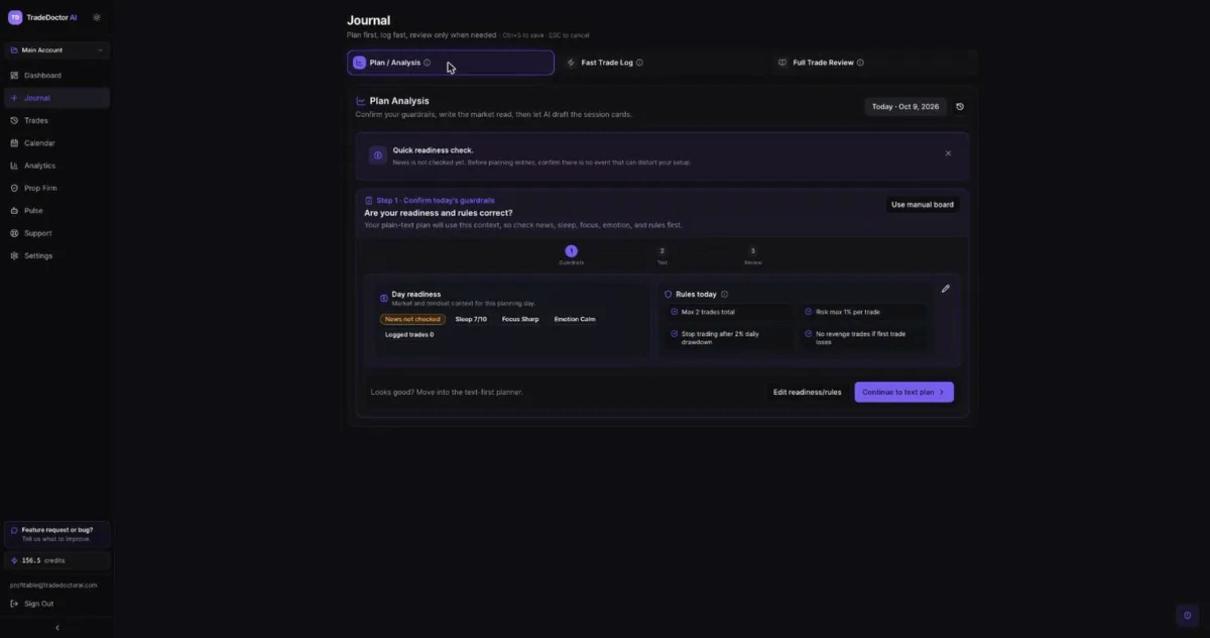
Tue. Plan: London pullbacks on GBP/USD and gold only. Max 2 trades, 0.5% risk each. Daily stop: −1%. Sleep 6/10, focus ok.
Trade 1: GBP/USD long, +1.4R, followed plan.
Trade 2: gold long, −1R, entered before candle close. Mistake: early entry.
Net: +0.4R, 2 trades, within limits. Tomorrow: wait for the close, no exceptions.
That is the whole thing. Now the seven fields behind it.
1. The plan, written before the first trade
Instruments, sessions, setups you will take, and conditions that mean you stay out. A plan written after the fact is just a description of what happened.
2. Risk limits for the day
Risk per trade, maximum trades, and your own daily stop. Set the personal stop tighter than your firm’s. If the firm allows a 5% daily loss and you stop at 1%, you have four percentage points of safety for the day you ignore yourself.
3. Condition check
Sleep, focus, mood, anything unusual happening in your life. Rate each from 1 to 10 or use one word. After a month, sort your results by sleep score. You may find a pattern, or you may not. Recording it is the only way to know.
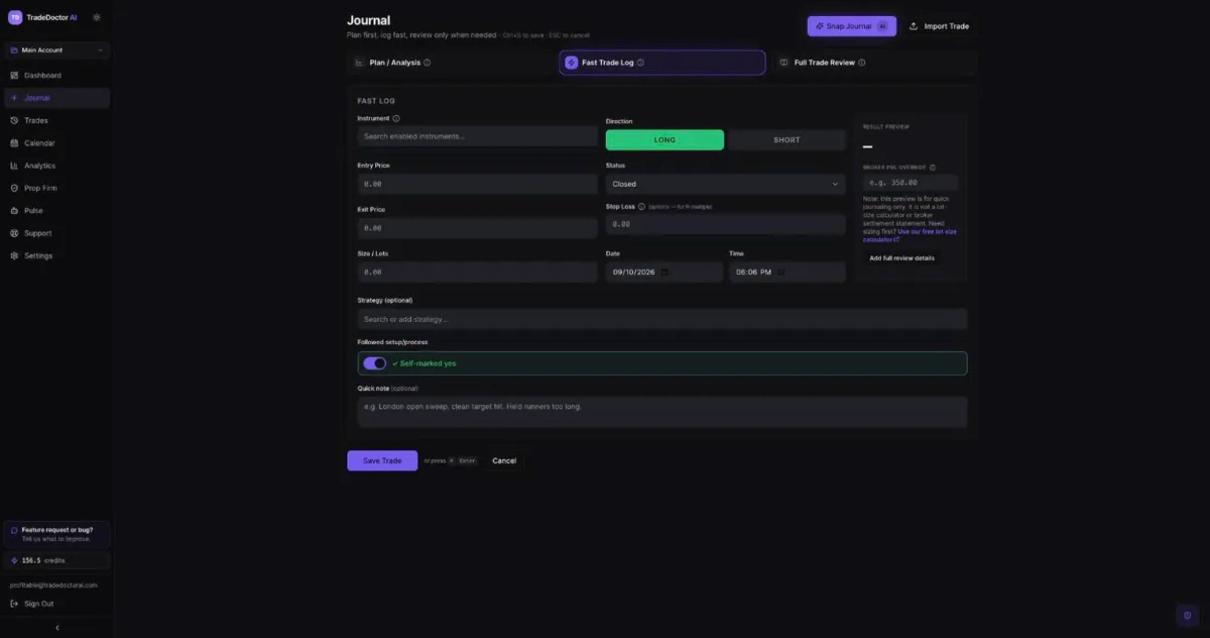
4. Each trade, in five lines
- Instrument, direction, setup name
- Planned risk (a number) and result in R
- Entry reason in one sentence
- Screenshot of the chart at entry
- Whether you followed the plan: yes, partly, no
5. Mistake tag, or the word "none"
Pick from a short list you maintain: early entry, oversized, moved stop, revenge, news, boredom. Keep the list under ten items. Long lists mean no one tag gets a meaningful count.
6. Trades you skipped
Write down setups you saw and passed on, and why. This is the single field most traders skip, and it is how you learn whether your filters add value. If the skipped trades would have lost, your discipline is working. If they would have won, your filters may be too tight.
7. One sentence for tomorrow
Not a lecture. One specific thing: "wait for the close on gold", "no trades after 11:30". If you cannot think of one, write "repeat today".
How the weekly review builds on it
On a fixed day, count three things: total R for the week, number of days you hit your own daily stop, and how many times each mistake tag appeared. If the same tag shows up four times, it is no longer a mistake, it is a habit, and next week’s plan should have a rule against it.
In TradeDoctor AI the plan, rules, condition check and tags are built into the daily workflow, and the weekly report summarizes how your funded account is doing. If you prefer paper or a spreadsheet, the structure above works exactly the same. For deeper review technique see how to do a proper trade review, and for the plan part how to build a trading plan.
Why five minutes is enough, and what to leave out
The checklist works because it is short. A journal entry that takes twenty minutes will be skipped on exactly the days you need it, usually after a loss. The seven fields above are the minimum that lets you answer one question at the end of the week: did I follow my plan, and if not, where did I leave it?
Leave out long narratives, screenshots of every chart, and opinions about the market. Those are fine for a weekly review, but they do not belong in a daily routine for someone on a funded account with limits to respect.
When the day goes wrong
The days that matter most are the bad ones. If you hit your daily stop, the entry should still be written, and it should be even more specific than usual. Record the sequence: which trade was first, what the size was, what happened to the next entry after the first loss, and what time you stopped. Often the pattern is the same: a reasonable first loss, then a rushed second trade at larger size.
A bad day with a complete entry is more valuable than a good day with none. It is the raw material for rules like “no trade within ten minutes of a stop-out”.
Using the entries after a month
After 20 trading days you will have around 20 plans, 20 sets of risk limits and perhaps 60 to 100 trades with mistake tags. Count the tags. If “moved stop” appears nine times and every other tag appears twice or less, you know which habit to work on next month. Count the skipped trades too: if the trades you skipped by the plan would have mostly lost, the plan is doing its job.
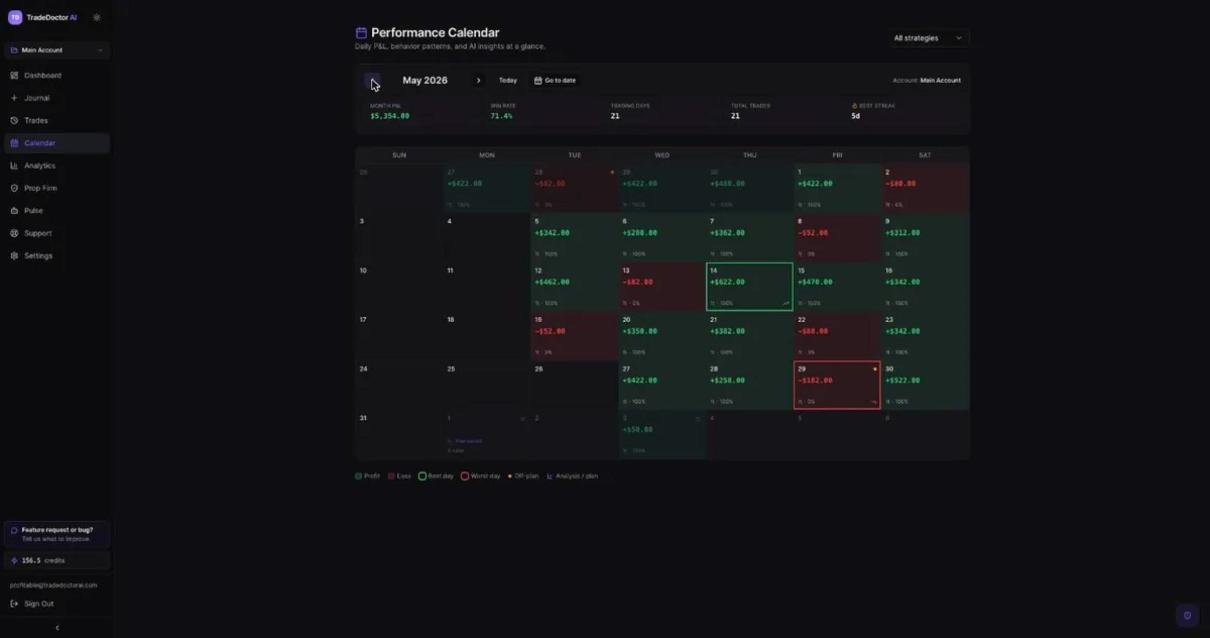
TradeDoctor AI’s fast trade log keeps the per-trade part of the checklist short, and the performance calendar shows each day’s result at a glance, so you can match the days you broke rules against the days that lost money.
Adapting the checklist to your firm
Some firms have consistency rules, minimum trading days, or restrictions on holding over the weekend. Add one line to field 2 for any rule your firm enforces that you could forget on a busy day. A good test is to ask which rule would end your account fastest if you broke it, and put that one first.
See also our guide to building a trading plan, which is where the daily plan field comes from.
Frequently Asked Questions
How long should a daily trading journal entry take?
About five minutes on an ordinary day if you keep the fields fixed. Spend longer once a week, not every night.
Do I need screenshots for every trade?
For entries, yes. They are the only way to tell later whether your entry matched your rules, because memory edits the story.
What if I broke my rules?
Log it exactly like any other trade and tag it. A journal that only records clean days is flattering you.
Is this different from a challenge-phase journal?
The fields are the same. The stakes change: funded accounts reward consistency over speed, so the daily stop and the mistake tags matter more than hitting a target quickly.