
For years, a trading journal meant one thing: logging trades.
You entered the date, symbol, entry price, exit price, position size, profit or loss, and maybe a short note. If you were serious, you added screenshots and calculated win rate, average winner, average loser, and risk-reward.
That was useful. It still is.
But logging alone is no longer enough for traders who want to improve. Markets move fast, traders collect more data than ever, and the real problems are often hidden inside behavior: emotional entries, moved stops, overtrading, revenge trades, early exits, and weak discipline after losses.
This is where AI is changing trading journals. A modern AI trading journal does not just store what happened. It helps diagnose why it happened.
The old journal was a record. The new journal is a review partner.
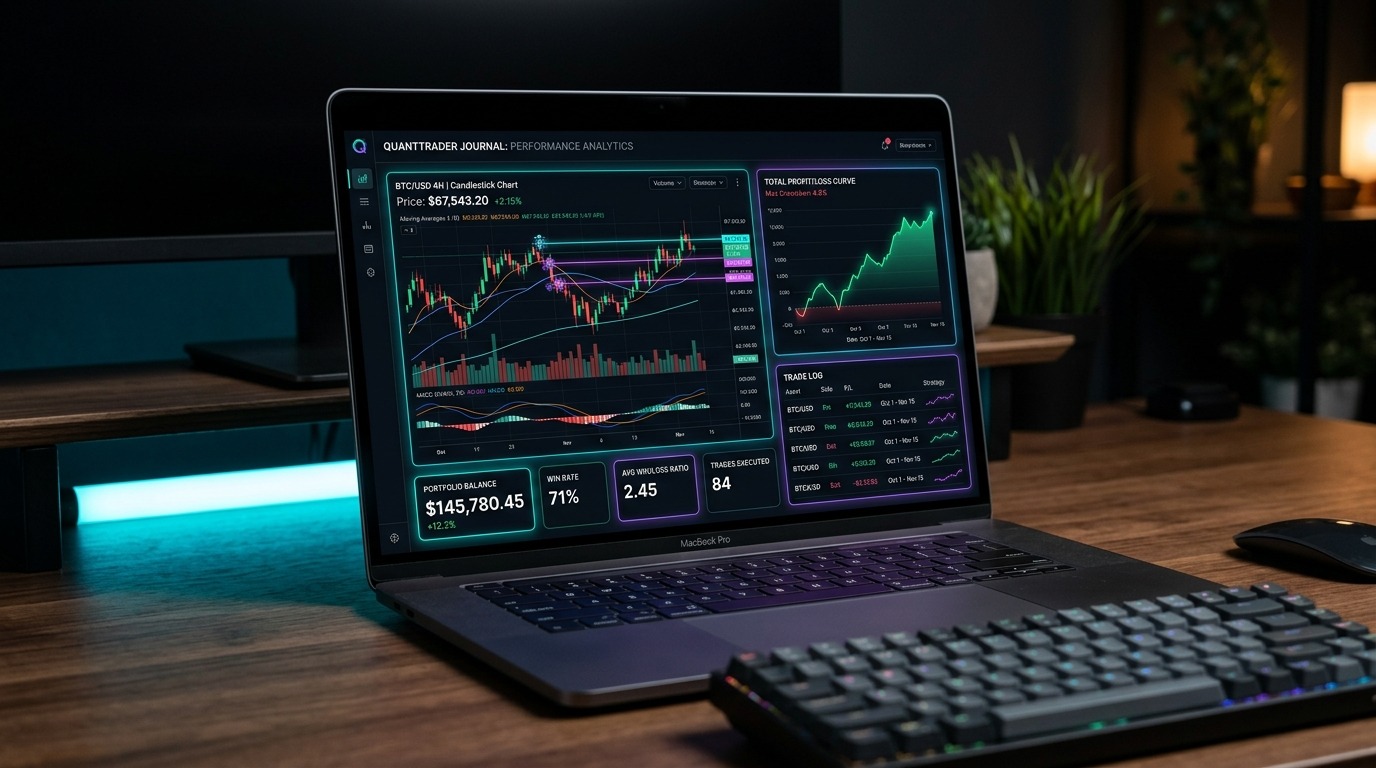
What Traditional Trading Journals Were Built to Do
Traditional trading journals were designed to help traders remember their trades and calculate performance.
They usually track:
- Date and time
- Symbol or market
- Long or short direction
- Entry and exit price
- Stop loss and target
- Position size
- Profit and loss
- Risk-reward ratio
- Basic notes
This information answers the first question every trader needs to ask: “What did I do?”
But serious improvement requires a second question: “Why did I do it, and should I do it again?”
That is where traditional journals often struggle.
The Problem With Logging Alone
Logging is important, but it does not automatically create insight.
A trader can log 300 trades and still repeat the same mistakes if the journal does not help connect patterns. A spreadsheet may show that Tuesday was a losing day, but it may not show that the losses came after a missed setup triggered revenge trading. A notes column may say “bad entry,” but it may not explain that the trader entered early five times in the same type of market condition.
Manual journals often miss:
- Emotional trading patterns
- Repeated rule breaks
- Setup quality differences
- Planned risk versus actual risk
- Market condition patterns
- Post-loss behavior
- Bad winners that reinforce poor habits
That is why many traders feel like they are journaling but not improving. They have a record, but they do not have diagnosis.
What Diagnosis Means in a Trading Journal
Diagnosis means identifying the cause behind a trading result.
For example, a basic log might say:
“BTC/USD long, -1.4R loss.”
A diagnostic journal asks:
- Was the setup valid?
- Was the entry early, late, or planned?
- Did the market condition fit the strategy?
- Was the stop placed at a real invalidation level?
- Did the trader move risk after entry?
- Was the trade taken after a loss?
- Did emotion influence the decision?
- Has this mistake happened before?
This is the shift from recording outcomes to understanding behavior.
How AI Trading Journals Diagnose Mistakes
AI does not need to predict the market to be useful. In trading journals, the practical value of AI is pattern recognition and structured review.
An AI trading journal can help analyze:
- Trade notes
- Setup tags
- Entry and exit behavior
- Risk decisions
- Emotional language
- Trade timing
- Market conditions
- Screenshots, when supported
Instead of leaving the trader to manually connect every dot, AI can surface repeated behaviors worth reviewing.
For example, TradeDoctorAI’s AI Trade Review can help traders spot patterns such as:
- “Your losing trades often happen after early entries before confirmation.”
- “Your largest losses are connected to moved stops.”
- “Your execution quality drops after the first loss of the day.”
- “You perform better in trending conditions than in choppy ranges.”
- “Your notes before poor trades often include urgency or frustration.”
These insights are more useful than a generic performance report because they point toward behavior the trader can change.
From “What Happened?” to “What Keeps Happening?”
The real power of AI trade journaling is not in analyzing one trade. It is in reviewing many trades together.
One early entry may be a mistake. Ten early entries after missed moves is a pattern. One emotional exit may not matter much. Twenty early exits whenever position size increases is a trading psychology problem.
Traditional journals often leave patterns buried inside rows. AI can help bring them to the surface.
| Old Trading Journal | AI Trading Journal |
|---|---|
| Logs individual trades | Identifies repeated behaviors |
| Shows profit and loss | Explains possible causes behind results |
| Stores notes | Finds themes in notes |
| Requires manual filtering | Highlights patterns automatically |
| Focuses on outcomes | Reviews process, risk, and psychology |
AI Helps Separate Good Trades From Winning Trades
One of the biggest mistakes traders make is judging trades only by outcome.
A winning trade can be a bad trade if you broke your rules, oversized the position, chased the entry, or moved the stop. A losing trade can be a good trade if it followed the plan and the loss was controlled.
AI trading analysis can help traders review process quality by looking at:
- Whether the setup matched the plan
- Whether the entry followed confirmation rules
- Whether risk stayed within the planned limit
- Whether the exit matched the trade plan
- Whether emotional notes suggest impulsive decision-making
This helps traders stop learning the wrong lesson from lucky wins and normal losses.
AI Can Improve Risk Review
Risk management mistakes are often the real reason traders struggle.
A trader may think they have a strategy problem, but the journal may show something else:
- Losses are larger than planned.
- Stops are moved after entry.
- Position size increases after losing trades.
- Leverage is used differently depending on emotion.
- Daily loss limits are ignored after frustration.
An AI trading journal can help diagnose whether the problem is the setup or the way risk is being handled.
This distinction matters. You do not fix a risk problem by adding another indicator. You fix it by changing rules, size, limits, and behavior.
AI Helps Reveal Trading Psychology Patterns
Trading psychology is difficult to review manually because emotion changes how traders remember events.
After a loss, you may remember the market as unfair. After a win, you may forget that the entry was impulsive. Over time, memory edits the story.
Journal data is more honest.
AI can help identify repeated emotional patterns such as:
- Fear of missing out before late entries
- Frustration before revenge trades
- Boredom before low-quality trades
- Fear before early exits
- Overconfidence before oversized positions
That is why the best trading journals now include emotional tags, written notes, screenshots, and AI analysis. The goal is not to remove emotion. The goal is to understand how emotion changes execution.
What AI Should Not Do in a Trading Journal
AI is useful, but traders should be careful not to misunderstand its role.
An AI trading journal should not be treated as:
- A guaranteed prediction tool
- A replacement for risk management
- A reason to blindly follow suggestions
- A shortcut around learning market structure
- A substitute for trader responsibility
The best use of AI is review, reflection, and pattern detection. You are still responsible for your trades. AI can help show you the pattern, but you decide how to change your process.
How to Use TradeDoctorAI for Diagnostic Journaling
Here is a simple workflow for using TradeDoctorAI as more than a trade log.
- Log the trade facts: Symbol, direction, entry, exit, stop, target, size, and result.
- Add setup context: Setup type, timeframe, market condition, and confirmation signal.
- Record planned risk: Write your intended risk before or during the trade.
- Add emotional state: Calm, rushed, fearful, frustrated, bored, or overconfident.
- Upload screenshots: Include entry and exit charts when possible.
- Write a short trade note: Explain why you entered and how you managed the trade.
- Run AI review: Let TradeDoctorAI summarize the trade and identify possible mistakes.
- Review patterns weekly: Look for repeated behaviors across multiple trades.
- Create one focus rule: Choose one specific behavior to improve next week.
This turns journaling from passive recordkeeping into active performance review.
Example: Logging vs. Diagnosing
Here is how the same trade might look in an old journal versus a diagnostic AI journal.
| Basic Log | Diagnostic Review |
|---|---|
| EUR/USD short, -1R | Valid resistance rejection setup, but entry was late after confirmation candle closed far from level. |
| Note: “Bad entry” | Entry quality marked late. Risk-to-reward was weaker than planned. |
| Result: Loss | Loss was controlled, but setup should be skipped when distance from stop is too wide. |
| No next action | Next rule: only take this setup if entry is within planned risk distance from invalidation. |
The diagnostic version gives the trader something to change.
Featured Answer: How Is AI Changing Trading Journals?
AI is changing trading journals by moving them from simple trade logs to diagnostic review systems. Instead of only recording entries, exits, and profit or loss, AI trading journals can help identify repeated mistakes, emotional patterns, risk issues, setup performance, and behavior that affects trading results.
The main benefit is better feedback. AI helps traders understand why results happen, not just what happened.
FAQ
What is an AI trading journal?
An AI trading journal is a trading journal that uses artificial intelligence to help analyze trade data, notes, screenshots, emotions, risk behavior, and performance patterns. It helps traders review decisions more clearly.
Can AI diagnose trading mistakes?
AI can help identify possible trading mistakes by analyzing repeated patterns in your journal. It can highlight issues like early entries, overtrading, moved stops, emotional exits, and poor setup selection.
Is AI trading analysis only for day traders?
No. AI trading analysis can help day traders, swing traders, crypto traders, forex traders, stock traders, and futures traders. Any trader who records trades can benefit from better review and pattern detection.
Can AI improve trading performance?
AI can support improvement by helping traders review decisions, identify repeated mistakes, and build better habits. It cannot guarantee profits or remove market risk, but it can improve the quality of feedback.
Should AI replace manual journaling?
No. AI should improve manual journaling, not replace honest trade records. Traders still need to log accurate data, write clear notes, and take responsibility for decisions. AI helps analyze that information more effectively.
Final Thoughts: The Future of Trading Journals Is Diagnosis
Logging trades is still important. But logging alone is no longer the full standard.
Modern traders need to understand behavior, not just results. They need to know when they break rules, why they overtrade, which setups deserve focus, where risk expands, and how emotions affect execution.
That is the shift AI brings to trading journals: from passive tracking to active diagnosis.
TradeDoctorAI helps traders journal trades, review decisions, identify patterns, and turn trading history into clearer feedback. Use it to move beyond simple logging and start understanding what your trades are trying to tell you.
The better your journal diagnoses your behavior, the better chance you have of changing it.