
Blowing a trading account rarely happens because of one bad trade.
It usually happens because of one bad pattern repeated until the account cannot survive it anymore. Maybe you risk too much after a winning streak. Maybe you move stops when the trade goes against you. Maybe one red day turns into revenge trading. Maybe you keep changing strategies instead of fixing the behavior that ruins every strategy you try.
The painful truth is this: most traders do not blow accounts because they cannot find setups. They blow accounts because they cannot control risk when emotions take over.
A strategy can survive normal losses. It cannot survive oversized positions, emotional decisions, and no honest review process.
Your account usually does not blow up from not knowing what to do. It blows up from not doing what you already knew.
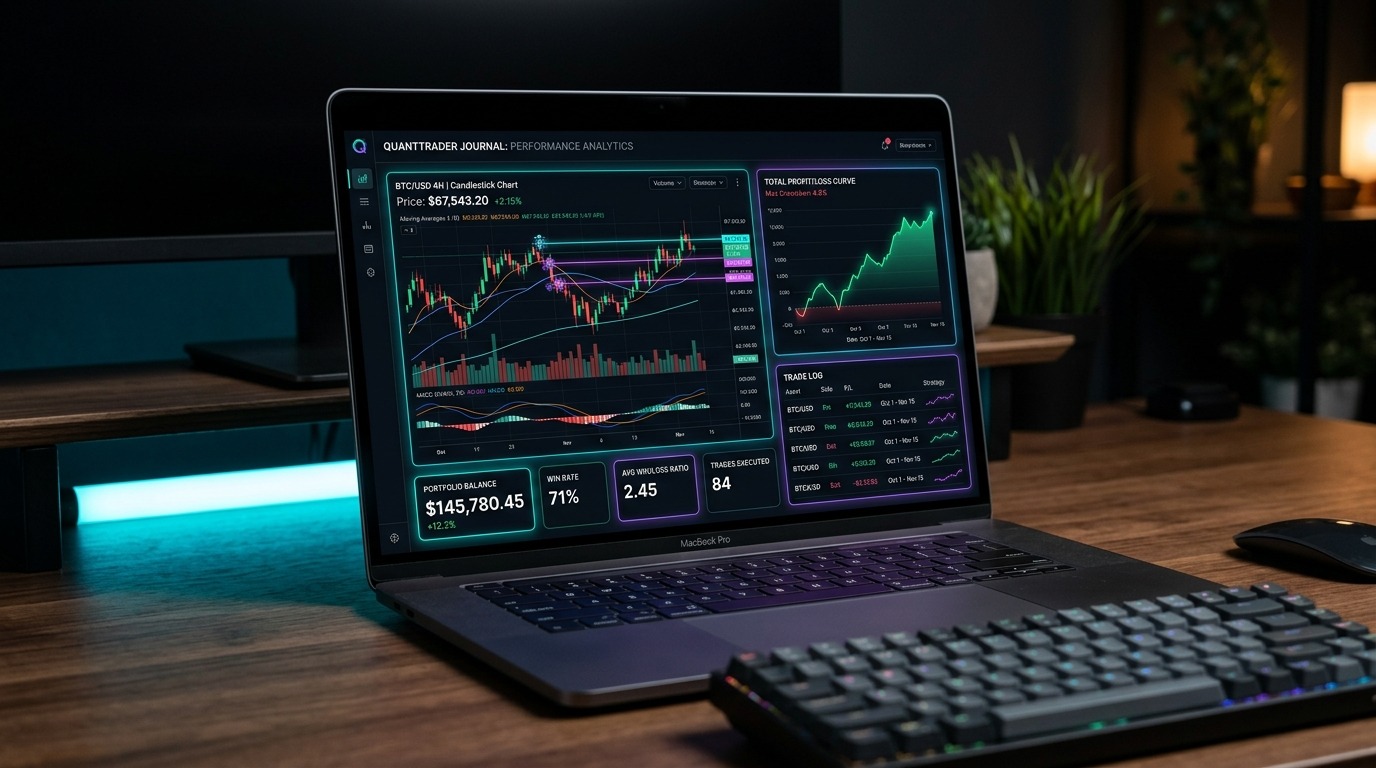
What It Really Means to Blow a Trading Account
Blowing an account does not always mean your balance goes to zero. Sometimes it means losing so much capital that you can no longer trade properly. Sometimes it means hitting a prop firm max loss limit. Sometimes it means taking a drawdown so large that your confidence is gone before your money is.
In practical terms, blowing an account means your risk process failed.
That failure can happen in stocks, forex, crypto, futures, options, or funded account challenges. The instrument changes. The underlying behavior is usually familiar.
- You risk more than your plan allows.
- You keep trading after your daily loss limit.
- You add to losing trades emotionally.
- You use leverage without respecting downside.
- You try to recover losses quickly instead of resetting.
- You review the damage after the fact but do not change the process.
The Real Reason: You Do Not Have a Risk Ceiling You Actually Respect
Most traders say they manage risk. Fewer traders have a risk ceiling they will obey when stressed.
A risk ceiling is the hard limit that protects you from your worst trading state. It defines how much you can lose on one trade, one day, one week, or one account before trading stops.
Without a real risk ceiling, your account depends on your mood. That is dangerous because your worst decisions usually happen when you are least capable of making good ones.
Examples of Weak Risk Rules
- “I will be careful today.”
- “I will stop if the market feels bad.”
- “I will only take good setups.”
- “I will not revenge trade.”
Those sound responsible, but they are not rules. They are intentions.
Examples of Strong Risk Rules
- “I risk 0.5% per trade.”
- “I stop trading after two full-risk losses.”
- “I do not move a stop farther from entry.”
- “I reduce size after any emotional rule break.”
- “If I hit my daily loss limit, the platform closes.”
The difference is simple: strong rules can be checked in a trading journal. Weak rules can be explained away.
Reason #1: You Increase Size When You Should Decrease It
One of the fastest ways to blow a trading account is increasing size at the wrong time.
Traders often size up after a win because they feel confident, or after a loss because they want to recover. Both can be dangerous if the size increase is emotional rather than planned.
After a win, overconfidence makes risk feel smaller than it is. After a loss, frustration makes risk feel necessary. In both cases, the trader stops thinking in probabilities and starts thinking in outcomes.
Warning Signs
- You size up because you “feel locked in.”
- You size up because you are red on the day.
- You take your largest trades after emotional moments.
- Your biggest losses are much larger than your average loss.
- You do not have a written rule for increasing position size.
If your position size changes based on mood, your account balance will eventually reflect that.
Reason #2: You Move Stops to Avoid Being Wrong
A stop loss is supposed to mark the point where the trade idea is invalid. But many traders move stops because they do not want to accept the loss.
At first, it feels harmless. You give the trade “a little more room.” Then a little more. Then the planned loss becomes a large loss. Then the large loss becomes a recovery mission. This is how one mistake turns into an account-threatening event.
The problem is not that every stop placement is perfect. The problem is changing risk after entry because your emotions changed.
How to Fix It
- Define invalidation before entering.
- Write the stop price in your trading journal.
- Track planned loss versus actual loss.
- Review every trade where risk increased after entry.
- Use alerts or platform controls if you repeatedly break this rule.
An AI trade review can help reveal whether your account damage comes from normal losing trades or from losses that expanded beyond the original plan.
Reason #3: You Revenge Trade After a Loss
Revenge trading is one of the most common reasons traders blow accounts. A normal loss triggers frustration. Frustration creates urgency. Urgency creates lower-quality trades. Then the trader tries to repair emotional damage with financial risk.
That rarely ends well.
Revenge trading can sound like:
- “I just need to get back to breakeven.”
- “One good trade fixes this.”
- “The market owes me after that stop hunt.”
- “I cannot end the day red.”
- “I know I can make it back.”
If your next trade after a loss has worse logic than your first trade of the day, you are not trading the market anymore. You are trading your discomfort.
For more on this pattern, review the trading psychology articles on the TradeDoctorAI blog.
Reason #4: You Treat Leverage Like Free Buying Power
Leverage does not just increase potential profit. It increases the speed of consequences.
A small move against you can become a large account loss if position size is too big. This is especially dangerous in forex, crypto, futures, and CFD-style products where leverage is easy to access.
Many account blowups come from traders asking, “How much can I trade?” instead of “How much can I afford to lose if I am wrong?”
A Better Leverage Question
Before entering a leveraged trade, ask:
- What is my exact risk if the stop is hit?
- What happens if slippage occurs?
- Can I emotionally accept this loss?
- Does this trade still make sense at half the size?
- Would this loss trigger revenge trading?
If the trade only feels exciting because the size is large, that is not edge. That is pressure.
Reason #5: You Keep Changing Strategies Instead of Reviewing Behavior
After blowing an account, many traders look for a new strategy. Sometimes that is necessary. But often the strategy was not the main problem.
If you break risk rules, chase entries, move stops, and revenge trade, a new strategy will not save you. You will eventually bring the same behavior into the new system.
This is why a trading journal is so important. You need to know whether your losses came from:
- A weak strategy
- Poor market conditions
- Oversized positions
- Rule-breaking
- Emotional trading
- Inconsistent execution
Without that distinction, you may keep replacing strategies when the real problem is the trader operating them.
How to Know What Is Blowing Your Account
Look at your last 20 to 50 losing trades. Do not review them emotionally. Review them like evidence.
Ask these questions:
- How many losses followed my written plan?
- How many losses were larger than planned?
- How many happened after I was already red?
- How many involved moved stops?
- How many were taken outside my best trading hours?
- How many were revenge trades?
- How many were valid setups that simply lost?
If most losses were valid planned losses, the strategy may need work. If most losses involved broken rules, the account is being damaged by execution and psychology.
A Simple Account Protection Plan
If you keep blowing accounts, do not start with a more complicated strategy. Start with account protection.
- Risk small enough that one loss does not change your emotional state.
- Set a hard daily loss limit before the session starts.
- Stop trading after two emotional rule breaks.
- Never increase size to recover losses.
- Do not move stops farther from entry.
- Journal every trade with planned risk and actual risk.
- Review weekly to find the behaviors causing your largest losses.
This will not make every trade profitable. It will help stop one bad decision from becoming an account-ending spiral.
Featured Answer: Why Do Traders Keep Blowing Accounts?
Traders keep blowing accounts because they risk too much, use leverage poorly, move stops, revenge trade, ignore daily loss limits, and fail to review their mistakes. The main issue is usually not one bad setup. It is repeated risk management failure under emotional pressure.
The solution is to reduce position size, create hard risk limits, track planned versus actual risk, and use a trading journal to identify the behavior causing the biggest losses.
FAQ
Why do I keep blowing my trading account?
You likely keep blowing your account because your risk controls are not strong enough when emotions rise. Common causes include overleverage, oversized trades, moved stops, revenge trading, and continuing to trade after hitting a loss limit.
Can a good strategy still blow an account?
Yes. A good strategy can still blow an account if the trader uses poor position sizing, ignores stops, increases risk after losses, or fails to follow the plan. Strategy and execution both matter.
How much should I risk per trade?
There is no universal number, but many traders use small fixed risk per trade so a losing streak does not damage the account or their psychology. The right amount is small enough that you can accept the loss and still follow your rules.
Should I stop trading after a big loss?
Usually, yes. A big loss often changes your emotional state. Taking a break protects you from revenge trading and gives you time to review whether the loss was planned, accidental, or caused by broken rules.
Can an AI trading journal help prevent account blowups?
An AI trading journal can help by identifying repeated mistakes, emotional patterns, oversized losses, and differences between planned and actual risk. It cannot force discipline, but it can make the account-damaging patterns easier to see.
Final Thoughts: Protect the Account First
If you keep blowing trading accounts, the answer is probably not another indicator, another Discord group, or another rushed strategy change.
The first answer is risk control.
Protect the account. Reduce size. Stop moving stops. Stop trying to recover losses immediately. Review your trades honestly. Find the exact behaviors causing the biggest damage, then build rules around them.
TradeDoctorAI can help you review your trades, analyze risk mistakes, and understand the patterns behind your account blowups. Use it to compare planned risk with actual risk, identify emotional trades, and build a review process that protects your capital before chasing growth.
You do not need to become fearless. You need a system that protects you when fear, frustration, and overconfidence show up.