
A trading journal is one of the simplest tools in trading, but also one of the most ignored.
Most traders want better entries, better indicators, better setups, or better market predictions. Those things can help, but they do not solve the deeper problem: if you do not review your own decisions, you will keep repeating the same mistakes without realizing it.
That is where a trading journal comes in.
A trading journal helps you track every trade, understand why you took it, review how you managed it, and learn what your results are really telling you. It turns trading from a cycle of wins, losses, emotions, and guesses into a feedback system you can actually improve from.
At TradeDoctorAI, we believe every trader needs a journal because your trades are not just results. They are data. And if you review that data properly, it can show you your strengths, weaknesses, habits, and hidden mistakes.
A trading journal does not make you a better trader by itself. It shows you exactly what you need to become better at.
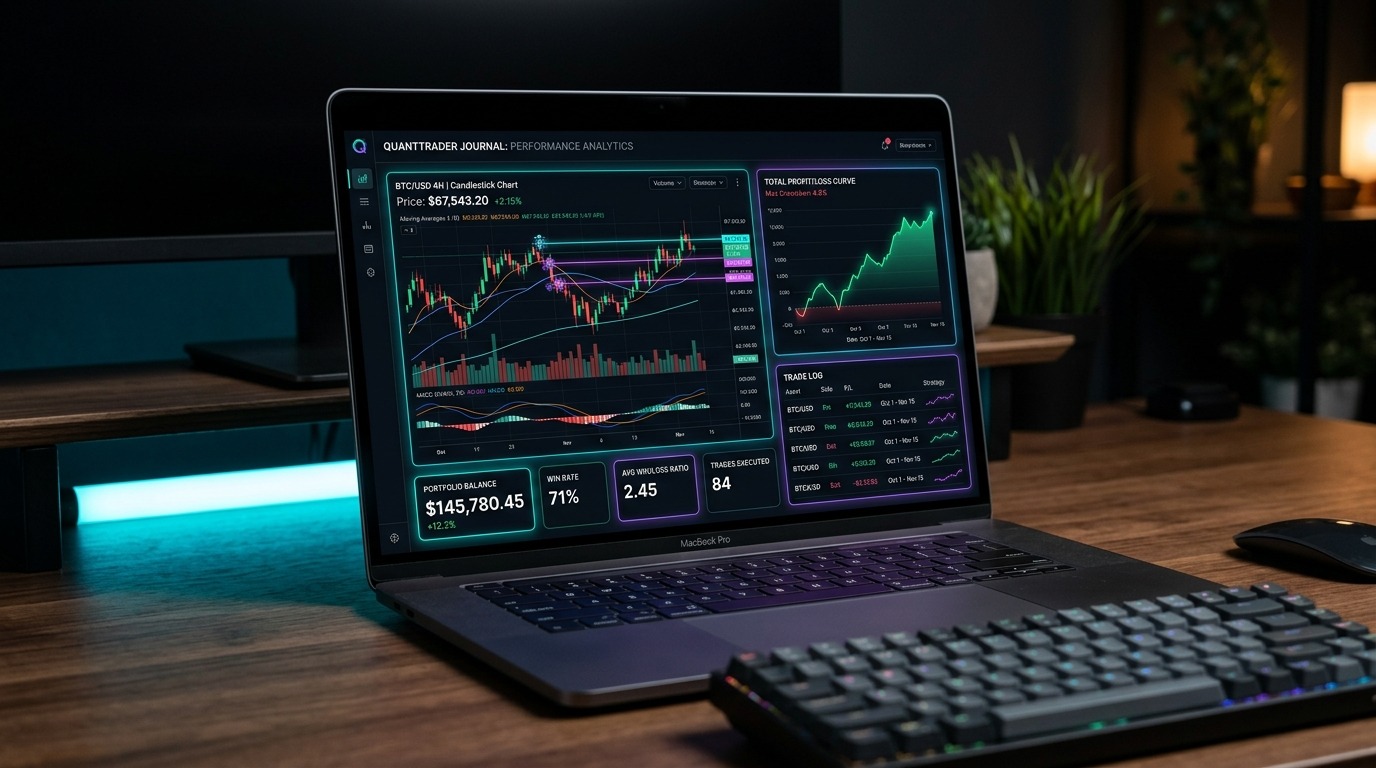
What Is a Trading Journal?
A trading journal is a record of your trades and the decision-making behind them.
At the basic level, it tracks information like:
- What you traded
- When you entered
- Where you exited
- How much you risked
- Whether the trade made or lost money
But a good trading journal goes further. It also tracks the reason for the trade, the setup type, market condition, emotional state, rule adherence, screenshots, and lessons learned.
That deeper context is what makes the journal useful. A trade log tells you what happened. A real trading journal helps you understand why it happened.
Why Every Trader Needs a Trading Journal
Every trader needs a trading journal because memory is unreliable.
After a winning trade, it is easy to remember yourself as calm and disciplined. After a losing trade, it is easy to blame the market. After a bad week, it is easy to think your strategy is broken. But your journal gives you something more honest than memory: evidence.
A trading journal helps you see:
- Which setups actually perform best
- Which mistakes keep repeating
- Whether you follow your trading plan
- How emotions affect your decisions
- Whether your risk management is consistent
- What conditions help or hurt your strategy
Without a journal, traders often guess. With a journal, they can review real behavior.
A Trading Journal Helps You Stop Repeating Mistakes
Most traders do not have hundreds of different problems. They usually repeat a few core mistakes.
Common trading mistakes include:
- Entering before confirmation
- Chasing after missed moves
- Moving stop losses
- Taking revenge trades after losses
- Overtrading during choppy markets
- Exiting winners too early
- Using too much size when emotional
If you do not journal, each mistake can feel like a one-time event. But when you review your trades, patterns become visible.
For example, you may think your main problem is bad entries. Your journal may show that the real issue is entering too soon after a loss. That is a very different problem, and it needs a different solution.
A Trading Journal Improves Risk Management
Risk management is where many traders struggle most.
It is one thing to say, “I risk 1% per trade.” It is another thing to check whether you actually did that across 50 trades.
A good trading journal helps you compare:
- Planned risk: What you intended to risk before entering
- Actual risk: What you really lost or gained
- Stop behavior: Whether you respected or moved your stop
- Position sizing: Whether size matched your plan
This matters because account damage often comes from losses that were larger than planned. If a planned -1R loss becomes -2.5R because you moved your stop, the problem is not only the trade. The problem is risk discipline.
TradeDoctorAI’s AI Trade Review helps traders identify those risk patterns faster.
A Trading Journal Reveals Trading Psychology
Trading psychology is hard to improve if you do not track it.
Emotions like fear, frustration, boredom, FOMO, and overconfidence can change your decisions. They can make you enter early, exit too soon, move stops, oversize, or keep trading after your plan says to stop.
Your journal should record emotional context such as:
- How you felt before entering
- Whether a previous trade affected you
- Whether you felt rushed or patient
- Whether you were trying to recover a loss
- Whether fear affected your exit
This is why we say emotional data is trading data. If emotion changes your execution, it belongs in your journal.
What Should You Track in a Trading Journal?
A beginner trading journal does not need to be complicated. Start with the fields that help you understand your decisions.
| Journal Field | Why It Matters |
|---|---|
| Date and time | Helps identify performance patterns by session or day |
| Symbol or market | Shows where you trade best |
| Setup type | Helps find which strategies actually work |
| Entry reason | Shows whether the trade had clear logic |
| Stop loss and target | Defines risk and planned reward |
| Planned risk | Shows what you accepted before entering |
| Actual result | Shows profit, loss, or R-multiple |
| Market condition | Shows where your strategy performs best or worst |
| Emotion | Reveals psychology patterns |
| Rule adherence | Shows whether you followed your plan |
| Lesson | Turns the trade into feedback |
Example of a Simple Trading Journal Entry
Here is what a useful journal entry might look like:
Symbol: BTC/USD
Direction: Long
Setup: Pullback continuation
Entry reason: Price retested prior resistance as support and formed bullish confirmation.
Planned risk: 1R
Result: +1.6R
Market condition: Clean uptrend
Emotion: Calm
Rule adherence: Followed plan
Lesson: This setup works best when trend structure is clean and I wait for confirmation.
This entry is short, but it gives enough information to review later. It tells you not only what happened, but why the trade was taken and whether it followed the plan.
Trading Journal vs. Trade Log
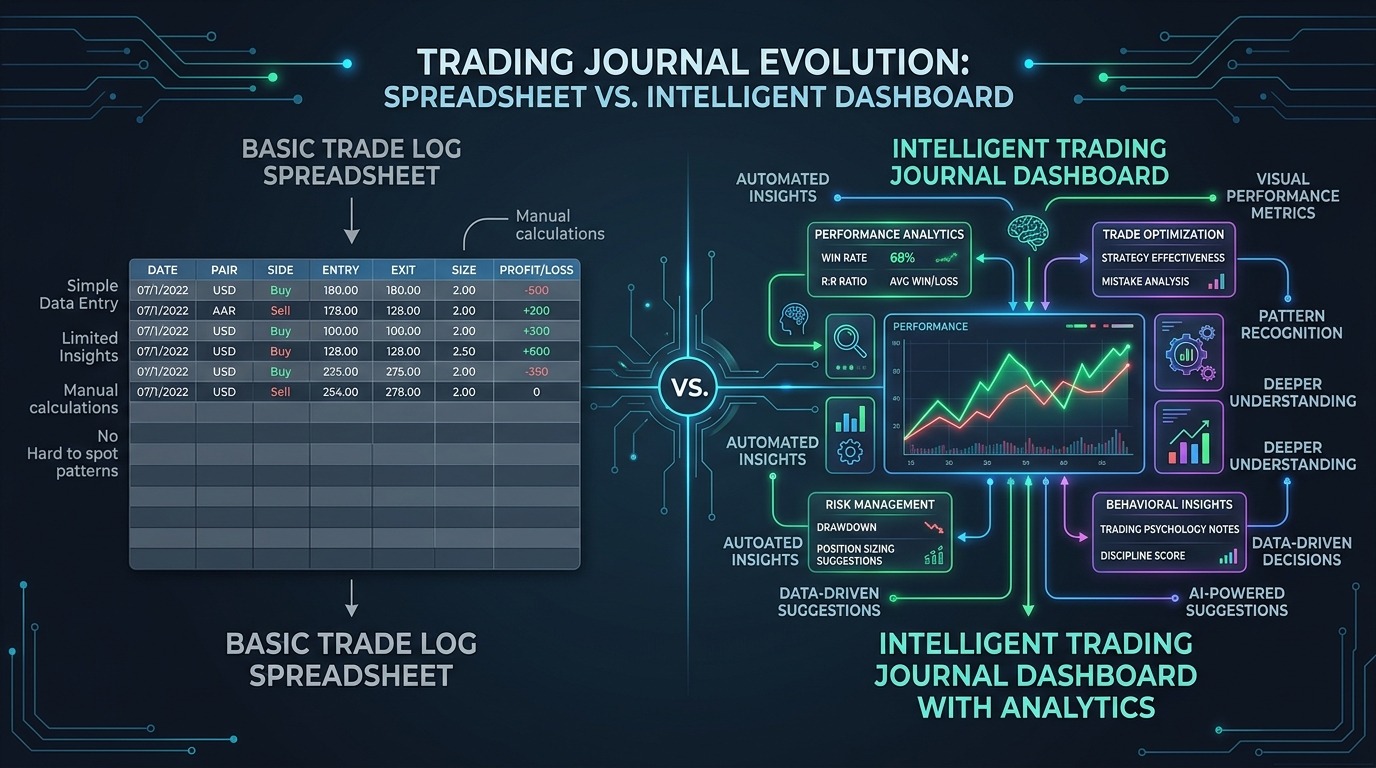
A trade log and a trading journal are not the same thing.
| Trade Log | Trading Journal |
|---|---|
| Records basic trade details | Reviews decision-making and behavior |
| Focuses on entry, exit, and P&L | Includes setup, risk, emotions, and lessons |
| Answers “What happened?” | Answers “Why did it happen?” |
| Useful for tracking | Useful for improvement |
Logging is a good start. Analysis is where the improvement happens. For a breakdown of exact fields to track, read our guide on what to write in your trading journal entry by entry.
How TradeDoctorAI Makes Journaling Easier
Manual journaling can work, but it often becomes difficult as your trade history grows. You may have dozens or hundreds of trades, screenshots, emotional notes, and setup tags. Finding patterns manually takes time.
That is why modern traders are turning to the best AI trading journals. TradeDoctorAI helps traders move from simple tracking to structured, automated review.
With TradeDoctorAI, you can use your journal to identify:
- Repeated trading mistakes
- Emotional trading patterns
- Risk management problems
- Best and worst setup types
- Market conditions that affect performance
- Differences between planned trades and impulsive trades
The goal is not to make journaling complicated. The goal is to make your feedback clearer.
When Should You Update Your Trading Journal?
The best time to update your journal is shortly after the trade or at the end of the session.
If you wait too long, memory starts changing the story. You may forget what you felt, why you entered, or whether the setup was actually clean at the time.
A simple routine works well:
- After each trade: Record the facts, setup, emotion, and quick lesson.
- End of day: Review best trade, worst trade, and main mistake.
- End of week: Review patterns across all trades.
You can find more beginner-friendly trading journal guides on the TradeDoctorAI blog.
Common Trading Journal Mistakes
Mistake #1: Only Tracking Profit and Loss
Profit and loss matters, but it does not explain the decision. Track setup, risk, emotion, and rule adherence too.
Mistake #2: Writing Vague Notes
Notes like “bad trade” or “no discipline” are not specific enough. Write which rule broke and why.
Mistake #3: Only Reviewing Losing Trades
Winning trades need review too. Some winners are clean. Others are lucky rule-breaks that can create bad habits.
Mistake #4: Not Tracking Emotions
If fear, frustration, boredom, or FOMO affected the trade, it should be recorded. Discover how to track your emotional states with our guide to keeping a trading psychology journal.
Mistake #5: Never Doing a Weekly Review
Individual trade notes are helpful, but weekly review reveals high-level patterns. Follow our framework on how to do a proper trade review to systematically eliminate recurring flaws.
Featured Answer: What Is a Trading Journal?
A trading journal is a record and review system for your trades. It tracks trade details like entry, exit, stop loss, target, risk, and result, while also capturing setup type, market condition, emotions, rule adherence, screenshots, and lessons learned.
Every trader needs a trading journal because it helps identify mistakes, improve discipline, manage risk, and understand what is actually working.
FAQ
Do beginner traders need a trading journal?
Yes. Beginner traders should use a trading journal from the start because early habits become long-term habits. If you need a step-by-step setup, see our complete beginner guide on how to start a trading journal. A journal helps beginners understand mistakes, track risk, and avoid relying only on memory.
Is a spreadsheet enough for a trading journal?
A spreadsheet is enough to start, but it often falls short for behavioral feedback. Find out why your trading spreadsheet may be misleading you, and why logging emotions and setup quality requires a dedicated system.
What is the most important thing to write in a trading journal?
The most important thing is the reason behind the trade. Write why you entered, where the trade was invalid, how you managed risk, whether you followed your plan, and what you learned.
How often should I review my trading journal?
Review trades after each session and do a deeper review once per week. Daily review captures details while they are fresh, and weekly review reveals patterns across multiple trades.
Can TradeDoctorAI help with trading journaling?
Yes. TradeDoctorAI helps traders journal trades, review decisions, analyze patterns, and identify mistakes in risk, psychology, setup selection, and execution. It turns trade history into clearer feedback.
Final Thoughts: Your Journal Is Your Trading Feedback System
A trading journal is not just for organized traders. It is for any trader who wants to improve.
Without a journal, you are relying on memory, emotion, and guesswork. With a journal, you can see what you actually did, why you did it, and whether your decisions are helping or hurting your results.
TradeDoctorAI helps traders build a better journaling process by combining trade records with AI-powered review. Use it to track your trades, study your behavior, identify repeated mistakes, and build a clearer path toward better decision-making.
If you want to trade better, start by reviewing better. Your next trade is not just a result. It is feedback waiting to be captured.