
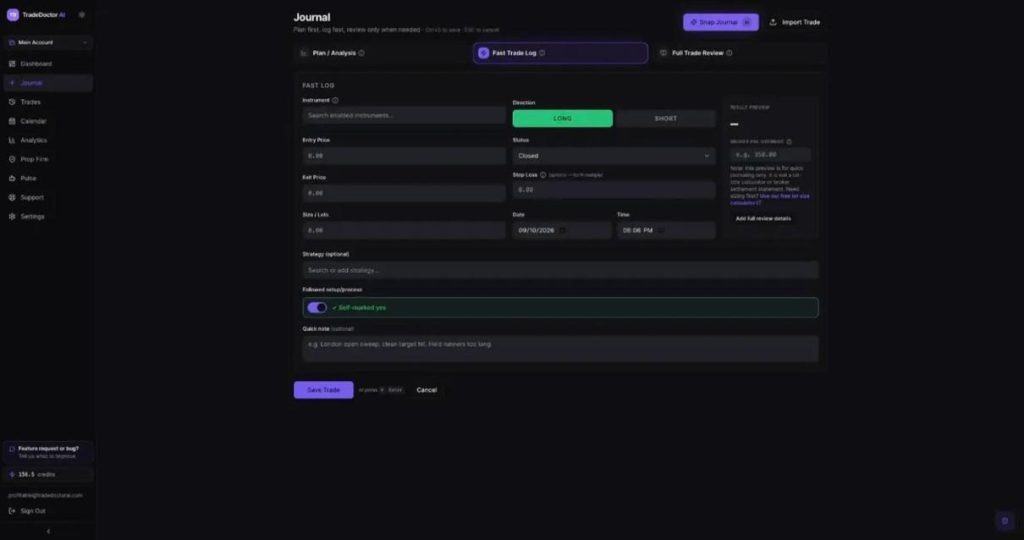
How to Journal Options Trades: Fields, R and Mistakes
What to record for each options trade, how to measure R on a spread with a worked put-credit-spread example, and which mistakes to tag.
What to record for each options trade, how to measure R on a spread with a worked put-credit-spread example, and which mistakes to tag.
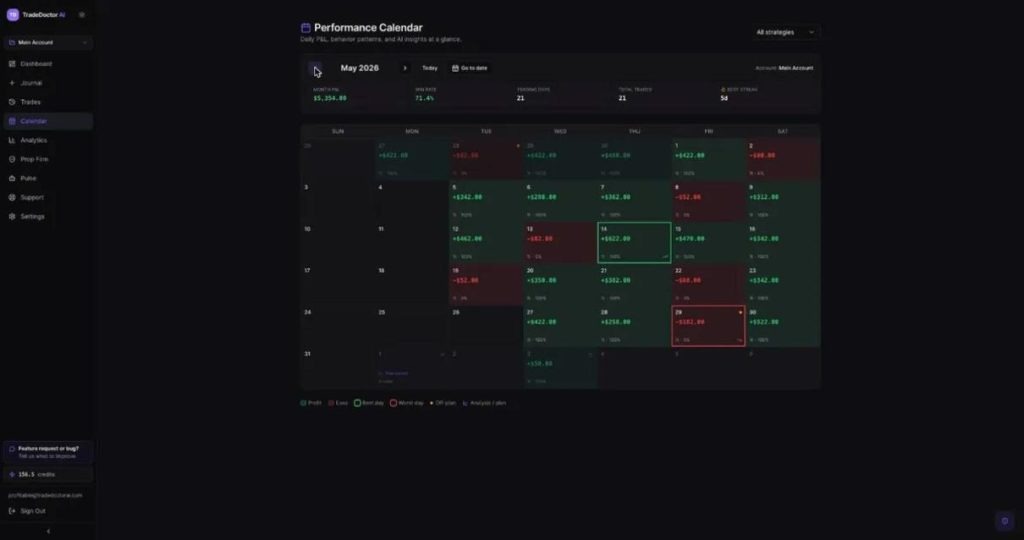
A practical way to journal swing trades: three note-taking moments, holding-time math, gap and swap costs, and a weekly review rhythm.
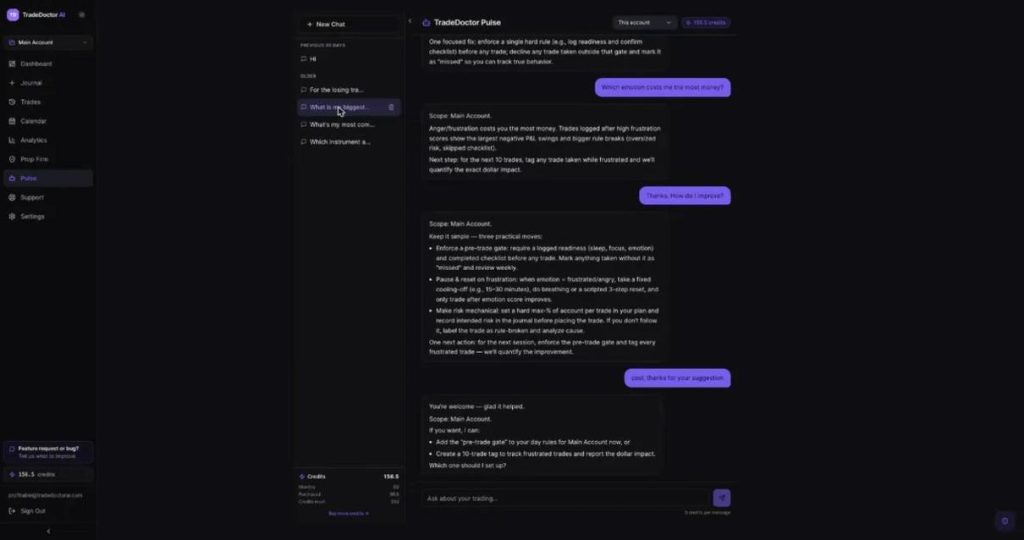
A fair look at Notion versus dedicated trading journal software: where each shines, what manual logging really costs, and a simple rule for choosing.
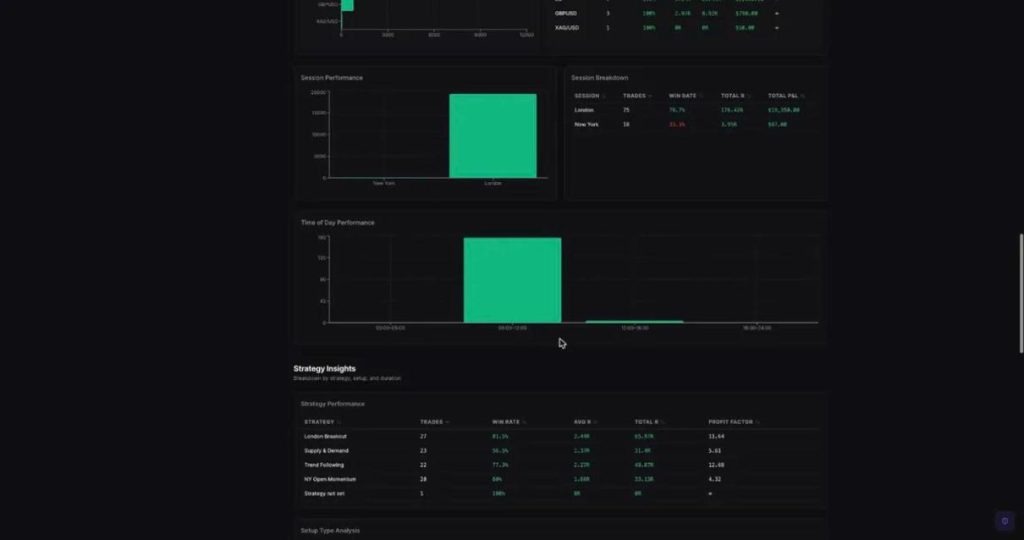
Use your trade journal to test a strategy: tagging, sample sizes, a worked example, and telling strategy problems from discipline problems.
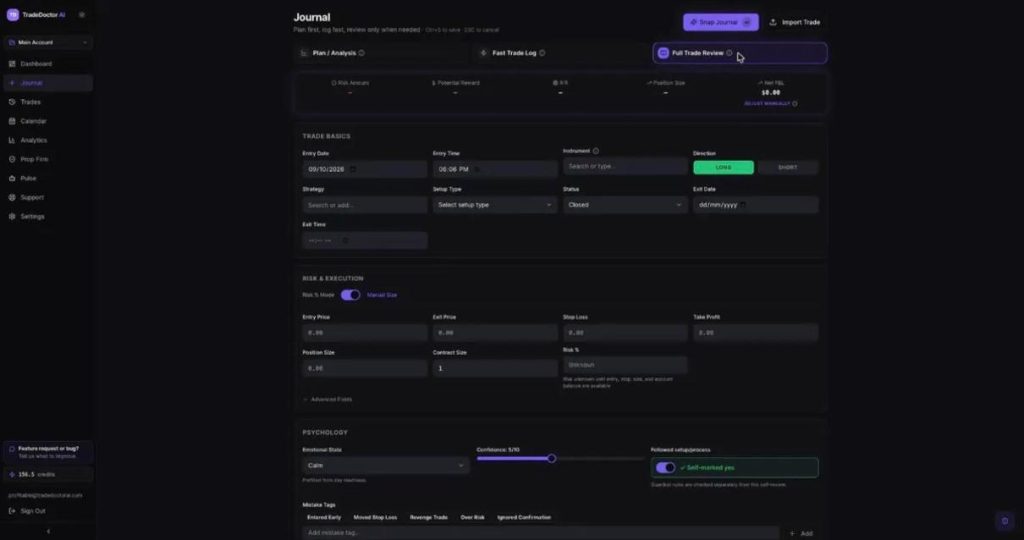
What MFE is, how to compare your exits with each trade’s peak, and how to test an exit rule on your own trades without fooling yourself.
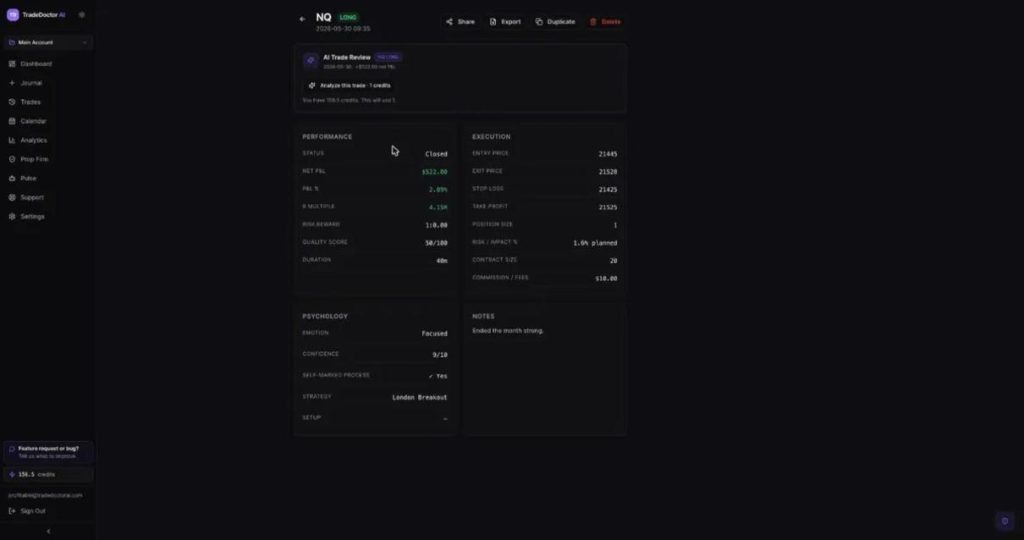
What MAE is, how to record it for each trade, and why analysing winners alone can mislead you when you set stop-loss levels.
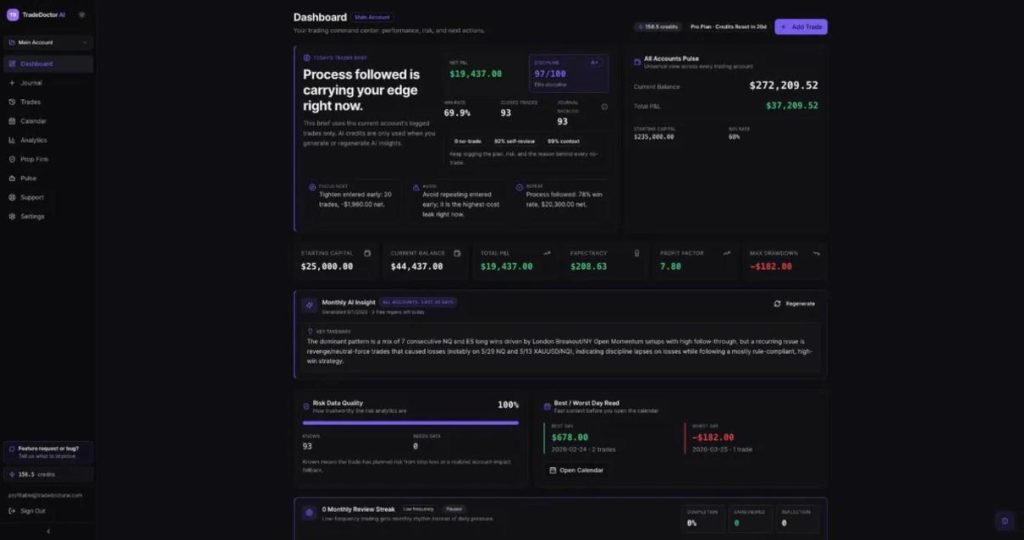
How to calculate the Sharpe ratio from daily returns, a worked 10-day example, and why short samples make it unreliable for day traders.
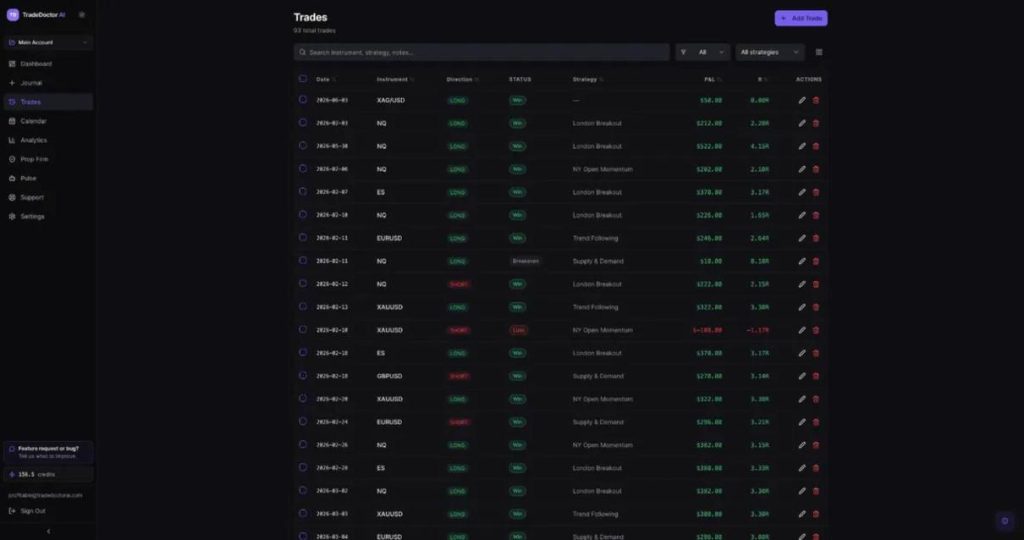
Learn how to calculate average R-multiple, how it differs from expectancy, and how many trades you need before the number is trustworthy.
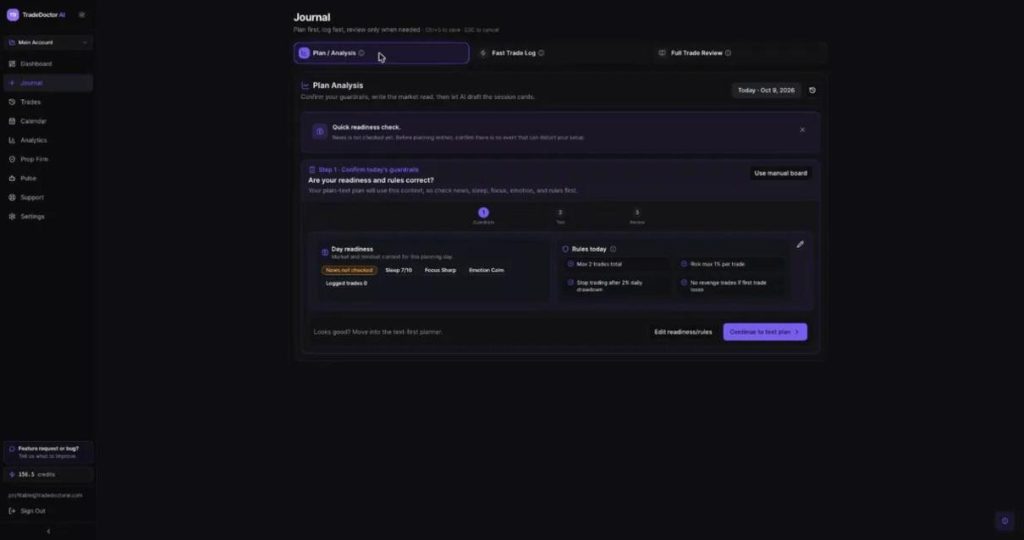
A seven-field daily trading journal checklist for funded accounts, with a sample entry, a mistake-tag system and a simple weekly review.
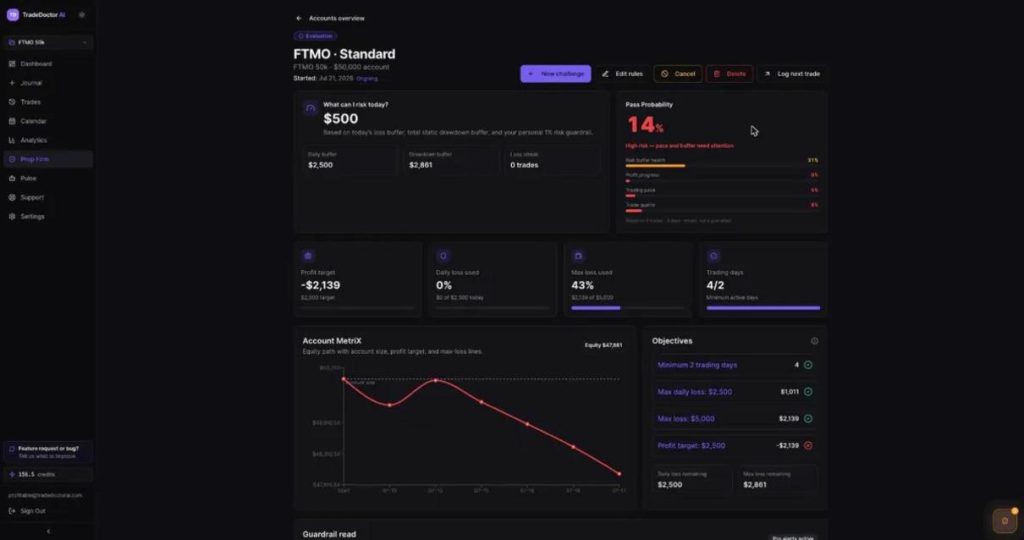
What a prop firm challenge journal needs to do, how spreadsheets, Notion and dedicated software compare, and where TradeDoctor AI fits and falls short.